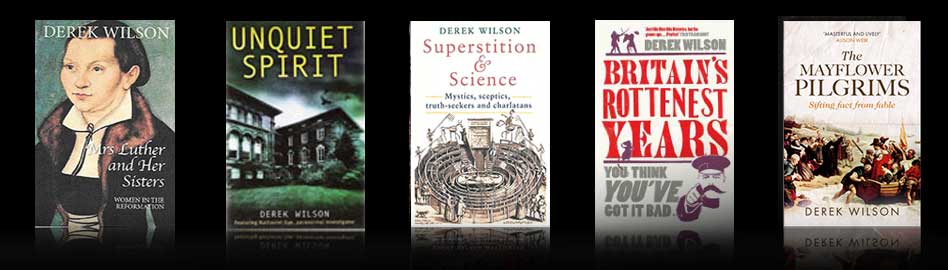
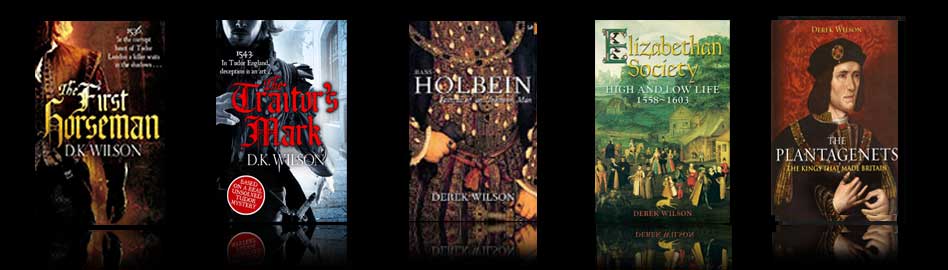
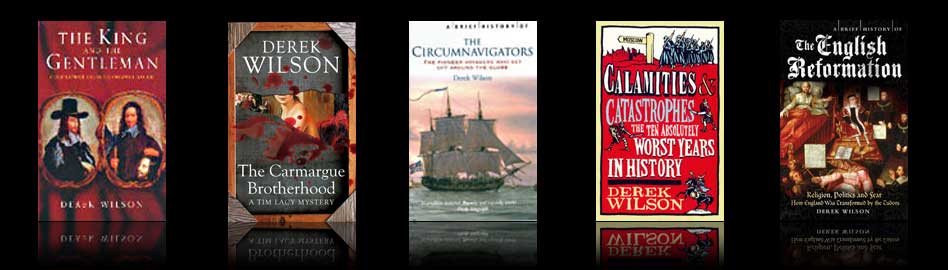
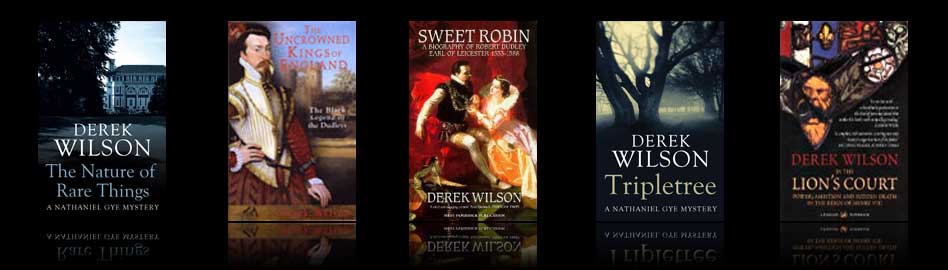

A warm welcome to my website for all lovers of history, whether factual reconstruction or fiction. Of course, it's not always easy to tell the difference. Academics and popular historians alike are limited by the amount of documentary evidence available. Inevitably we find gaps in the source material and for the sake of constructing a flowing narrative we are obliged to fill them with guesswork. In other words, we have to use our imagination. Novelists tend to approach the problem from the other end. Our aim is to tell a good story. Therefore, imagination rules. We are selective about our facts. We paint events in colours of our own choosing. We report conversations that never happened to represent what we think the speakers were feeling. Yet to be believable we must work within historical boundary lines. Anything beyond that is fantasy rather than fiction.
All that may seem to be obvious but I believe it is important to clarify the moral constraints we place (or should place) upon ourselves. We are not 007s; we have no licence to kill the truth. That is why, for example, I do not write my novels around the lives of major historical characters. If I did that I would, inevitably, be distorting history; creating heroes and heroines, villains and victims to suit my own romanticised fancy of the sort of people I would like them to have been. Thus, my Treviot novels (The First Horseman, The Traitor's Mark and the Devil's Chalice) are written about imaginary people coping with life in a world very different from our own. In this way I can, I hope, give readers some idea of what it was like to live in that world. To do that I have to feed their imagination with the sights, sounds and smells my characters would have experienced and introduce to their minds the ideas and assumptions, beliefs and prejudices that were the commonplaces of that different world. That requires research that goes way beyond what we were introduced to in the narratives of kings and queens, politicians and churchmen, generals and diplomats that dominated the kind of 'history' we were introduced to at school.
 All material © Derek Wilson | enquiries@derekwilson.com